Serilda Long: A Long Life (52 Ancestors #16)

Serilda Long is another ancestor that I have had a hard time tracking.  She has appeared as Serilda, Sirelda, Serelda, Serrelda, Serralda, Zerelda, Zerilda, and Cerelda.  She has been Long, Gilliland (sometimes Gilleland, Gilland or Gillen), and Bridges.  I really should re-evaluate how I spell it.  I’ve just been spelling it Serilda because that’s how it appeared on the first record on which I saw it written.  It appears most often as Zerelda or Serelda.  But I digress.

Serilda Long was born on January 15, 1820, in Kentucky, to parents Daniel and Ruth (Lewis) Long.1,3,5,7,8,9,10  She married Leason Gilliland sometime before 1840.11  The story I heard growing up was that Leason worked on a steamboat and was away a lot, but the 1840 Census says that he was employed in agriculture.2  I suppose it is possible that he switched professions, as many of my ancestors have done, but that seems like a big change to me.

Serilda and Leason had Daniel circa 1838, William T. circa 1840, Ezra W. in 1841, and Mary Elizabeth on January 22, 1849.1,3,5,7,8,11,12  In 1850, Serilda and the children were living with Asa and Maria J. Loundsbury or Longsberry.3  Leason wasn’t there, which caused me to suspect that he had died.  However, Sarah A. Gilliland was born in 1853.5,7,8  Either Leason was still alive and happened to be away from home, prompting Serilda to move in with a friend or neighbor, or Sarah was illegitimate.

Leason was most likely dead by 1857 (I haven’t found evidence of a divorce), as Serilda married John T.M. Bridges on October 15 of that year.4  Shortly after their marriage, John Bridges was tried for and convicted of murder and was sentenced to life in Indiana State Prison in Jeffersonville, Indiana in 1859.  (See Coroner’s Inquest, Trial Day 1, Trial Day 2, Trial Day 3, Trial Day 4, and The Verdict).  By 1860, Serilda had taken a job as a seamstress to provide for her family.5  At some point during John’s confinement, they must have realized that the “preacher of the Gospel” who had married them was not actually ordained and the marriage, therefore, not legal.  (See Marriage Mystery and Two Marriages).  John was released from prison for good behavior on February 2, 1871 (See John Bridges), and Serilda married him again the very next day.6

John died in 1899, and Serilda went to live with her daughter, Sarah, and her children.  Her son, Ezra, lived with them as well.8  Serilda lived with Sarah until her death on September 13, 1907.1,9,10  Serilda lived a long life, but I wonder if she would have lived longer without all of the stress that she must surely have felt.
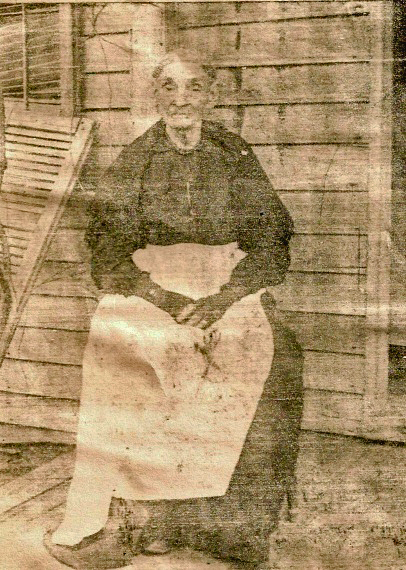
Serilda Bridges, circa 1900.

Serilda (Long) Gilliland Bridges, circa 1900.


Sources

1.  Transcription of the Rakestraw Family Bible.

2.  1840 U.S. Census, Hardin, Kentucky, p. 30, Ancestry.com.

3.  1850 U.S. Census, New Albany, Floyd, Indiana, p. 105, HeritageQuestOnline.com.

4.  Floyd County, Indiana Marriages, Volume 4, p. 485, Stuart Barth Wrege Indiana History Room.

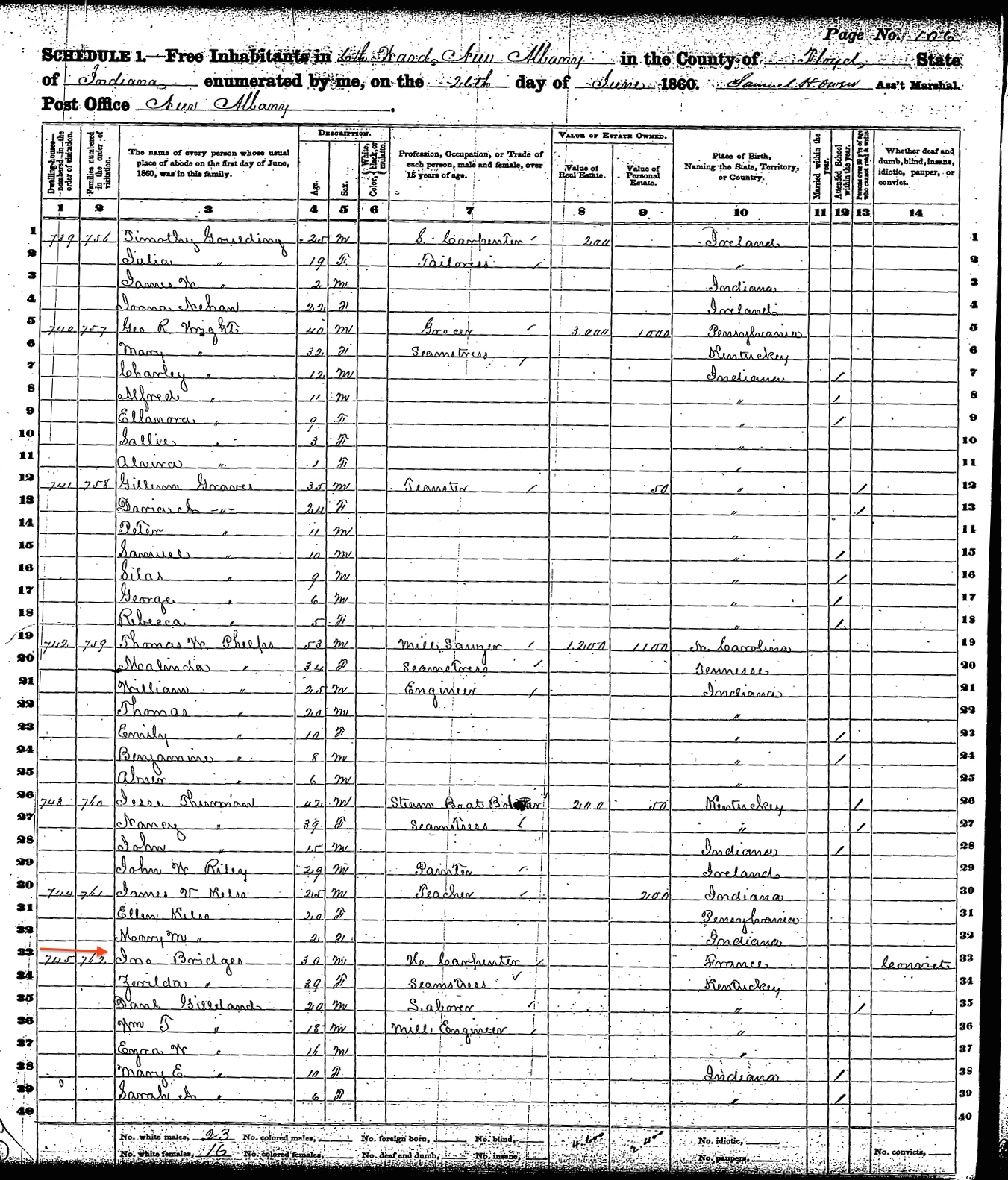
5.  1860 U.S. Census, 6th Ward, New Albany, Floyd, Indiana, p. 106, FamilySearch.org.

6.  Floyd County, Indiana Marriages, Volume 6, p. 644, Stuart Barth Wrege Indiana History Room.

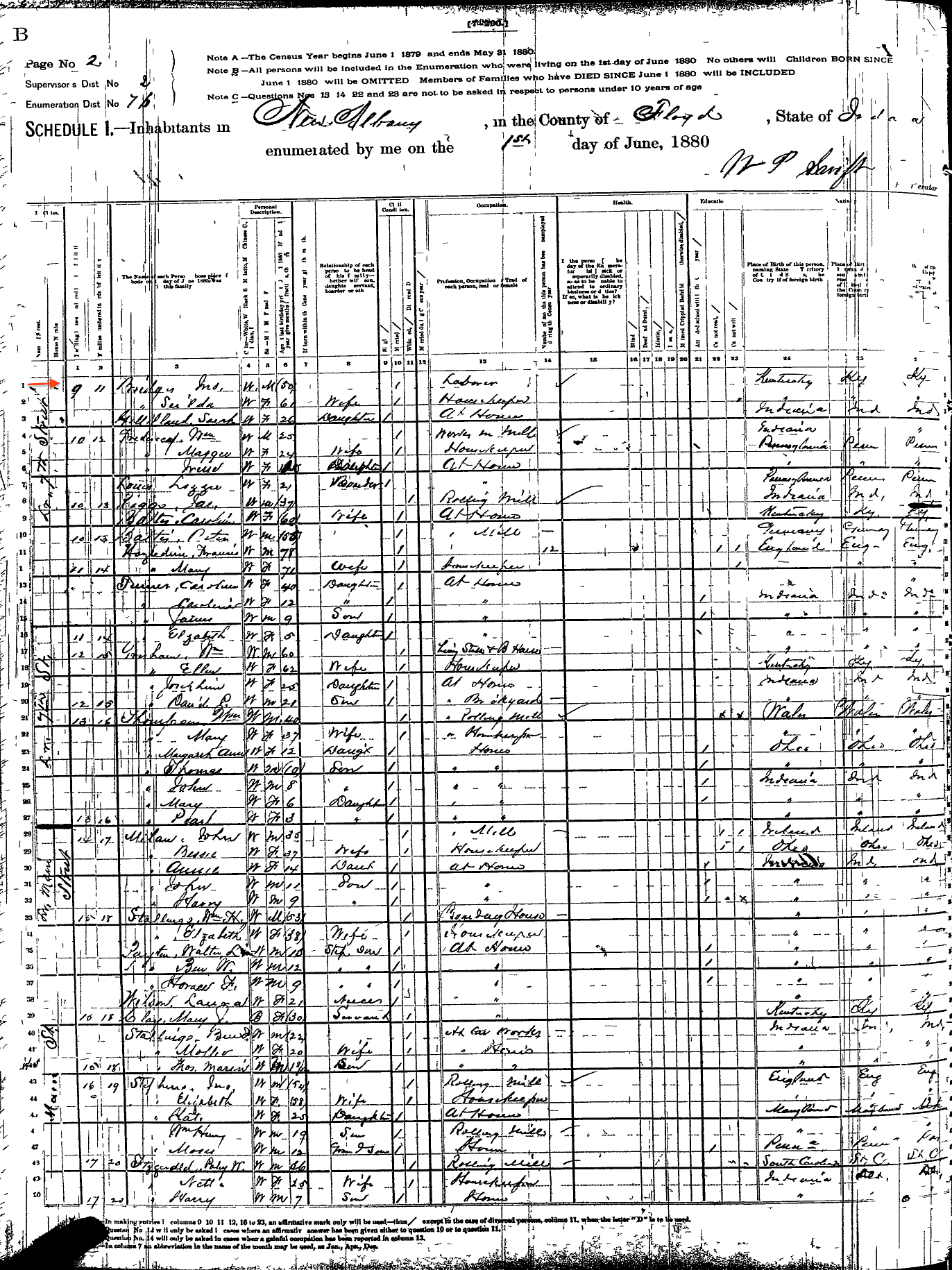
7.  1880 U.S. Census, New Albany, Floyd, Indiana, p. 2B, HeritageQuestOnline.com.

8.  1900 U.S. Census, 5th Ward, New Albany, Floyd, Indiana, p. 16B, FamilySearch.org.

9.  Floyd County, Indiana Deaths, Book CH-20, p. 32, Stuart Barth Wrege Indiana History Room.

10.  Obituary, New Albany Evening Tribune, Friday, 13 Sept 1907, p. 4, column 2, Stuart Barth Wrege Indiana History Room.

11.  Floyd County, Indiana Deaths, Book CH-33, p. 54, Stuart Barth Wrege Indiana History Room.

12.  Floyd County, Indiana Deaths, Book CH-37, p. 67, Stuart Barth Wrege Indiana History Room.

John Bridges: Maniacal, Mischievous, or Misunderstood?

On a rare few occasions, my grandpa told me about John Bridges, my fourth great grandmother’s second husband.  He never spoke in specifics.  He said that his great grandmother, John’s step-daughter, did not like him.  According to family legend, John was a drunk and a layabout who never worked.  He went to prison and was eventually put in the asylum because he was insane.  I never cared to look into it until I happened upon his two marriages to Serilda Gilliland.

I know nothing of John’s life before he married Serilda.  John Bridges is a fairly common name.  In fact, there was another John Bridges living in the same town at the same time.  In addition, multiple birth places are given for him and I have next to no information about his parents.

In previous posts, I revealed that John Bridges married Serilda Gilliland in 1857, and then again in 1871 because the first marriage wasn’t valid.  I also posted at length about the trial for the murder of Charles Baker and the subsequent sentence of life in the state prison in Jeffersonville.  I still had no answers as to how John could go to prison, in Clark County, for life in 1859 and then somehow be in Floyd County in 1871 to marry Serilda again.  So I kept looking.

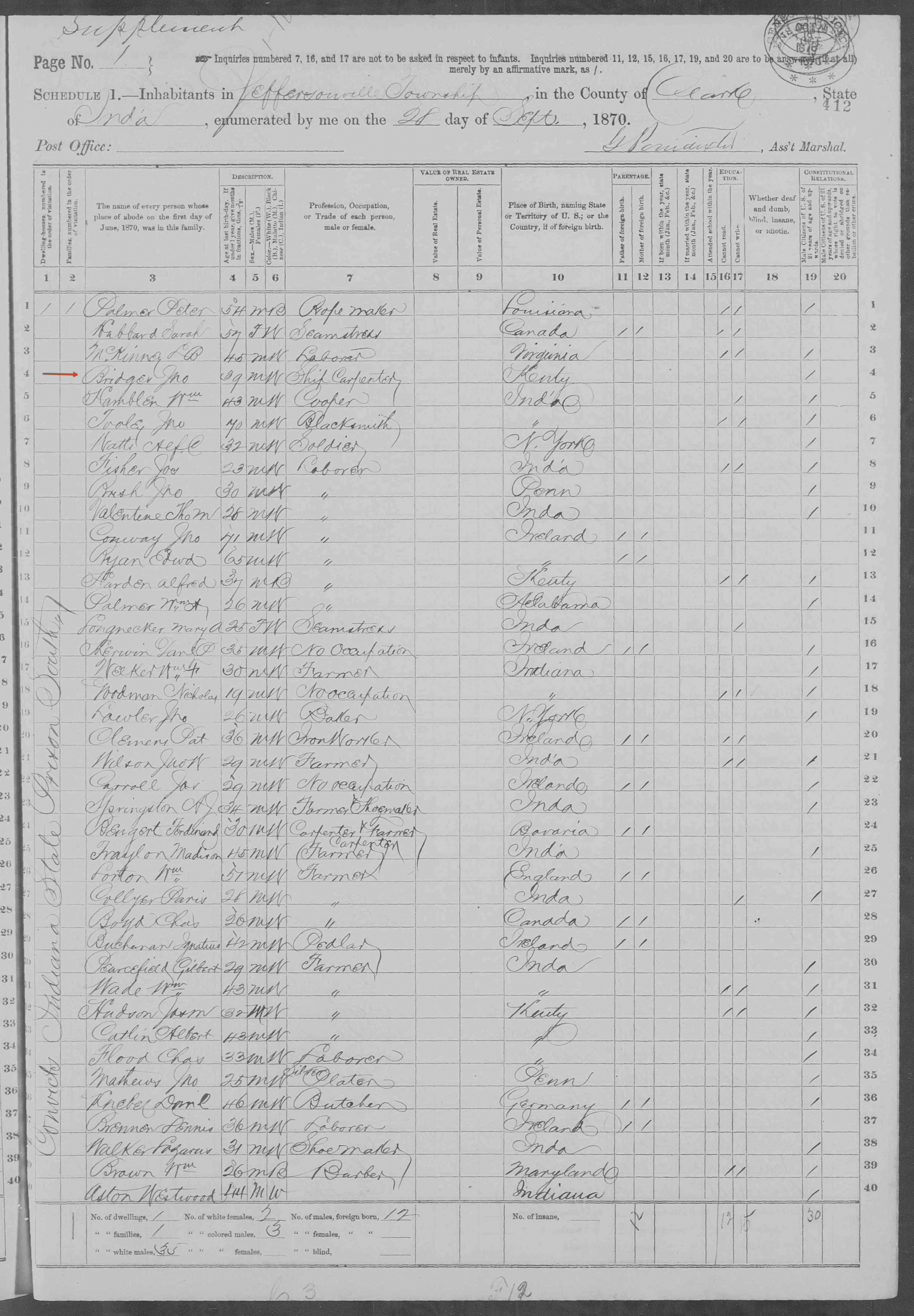
I found him on the 1860 Census listed with the family, but in the 14th column, he is marked “convict.”  It also gives his birthplace as France.  It is important to note that he is listed as a ship carpenter, which means he did, at one point at least, have a job.  In the 1870 Census, John is listed among other convicts in the Indiana State Prison South supplement.  Here, his birthplace is Kentucky and he is still listed as a ship’s carpenter.  Then, in 1871, John is released from prison.

New Albany Daily Ledger, Friday, 3 February 1871, p.2, column 1, Stuart Barth Wrege Indiana History Room

New Albany Daily Ledger, Friday, 3 February 1871, p.2, column 1, Stuart Barth Wrege Indiana History Room

The case of the prosecution seemed shaky.  It relied heavily on the testimonies of people who were known to lie and people who simply overheard something, what is known in court as “hearsay.”  The paper had stated that there would be a move for a new trial.  I suppose that a pardon isn’t hard to believe.  This explains how John was able to get married in Floyd County on the very day that this article was published.  The fact that John was pardoned made me wonder what else in the family legend may have been skewed.  And the search continued.

In the 1880 Census, he was living with his wife and youngest step-daughter.  He is a laborer.  His birthplace is Kentucky, as is the birthplace of both his parents.  He managed to stay out of trouble for about ten years after his release, or at least anything that the newspaper would have found out about.  Until…

New Albany Ledger, Thursday, 20 July 1882, p.4, column 2, Stuart Barth Wrege Indiana History Room

New Albany Ledger, Thursday, 20 July 1882, p.4, column 2, Stuart Barth Wrege Indiana History Room

Somehow, he got out of it with only a fine.  The next item in the timeline for John Bridges is his entry into the Floyd County Asylum (aka. Floyd County Poor Farm) and subsequent death.  He entered the asylum on March 13, 1899 and his condition was “sickly,” not insane or feeble-minded.  He died on May 2, 1899.  His obituary confirms his condition.

New Albany Daily Ledger,  2 May 1899, p.4, column 2, Stuart Barth Wrege Indiana History Room

New Albany Daily Ledger, 2 May 1899, p.4, column 2, Stuart Barth Wrege Indiana History Room

I always have to take newspaper articles with a grain of salt.  In fact, never believe what you read in the paper unless you have another document to confirm it.  This one says that John was in the asylum for two years, when asylum records state it was two months.  It does confirm that he was in poor health.  It also suggests that he was able to work until recently.  His death record provides no new information, other than another possible birthplace.

Floyd County, Indiana Deaths, CH-18, p. 7 (transcription)

Floyd County, Indiana Deaths, CH-18, p. 7 (transcription)

Addressing the issues…

Was John Bridges a drunk?  It’s hard to say.  The only mention of alcohol was in the murder trial.  He was at a bar at about four o’clock in the afternoon and “seemed to be in liquor.”  Was this a regular occurrence or was it to do with the upcoming confrontation with Baker?  We’ll probably never know.

Was he a layabout who never worked?  Not from what I can tell.  He is listed on two census as a ship’s carpenter and as a laborer on a third.  His step-son said that he was a watchman on the river.  His obituary said that he had been “unable to work in recent years.”

Did he go to prison?  Yes.  He was sentenced to life in prison for the murder of Charles Baker.  He was pardoned after he had served twelve years.

Was he sent to the asylum for insanity?  No.  The asylum records indicate that he was “sickly.”  His obituary confirms that he had come out of prison in “broken health.”  There is no indication that he was insane.  That’s not to say he wasn’t, but there are no official records indicating insanity and that is not the reason he ended up in the asylum.  It is strange that he has three different birthplaces.  This could indicate insanity, or maybe he enjoyed tall tales.

I still have very few hard facts about John Bridges, but I feel as though I have a fairly complete story for him (minus his early life).  I also find that I don’t dislike him as much as I did before.  When I stop to think about it, it’s amazing the strong feelings I have for and about people I’ve never met simply because I am related to them.  I know it has to be the same for others, to some degree.  I see it when people talk about how proud they are of their Revolutionary War or Civil War ancestors, or how scared they are that they might find skeletons in the family closet.  To the latter, I say, keep researching, because what you think you know may not be what really happened.  John Bridges is a case in point.

The State of Indiana v. John Bridges: The Verdict

The first article is about the instructions to the jury, and then we finally have a verdict.

New Albany Daily Tribune, Monday, 7 November 1859, p.3, column 1, Stuart Barth Wrege Indiana History Room

New Albany Daily Tribune, Monday, 7 November 1859, p.3, column 1, Stuart Barth Wrege Indiana History Room

New Albany Daily Tribune, Tuesday, 8 November 1859, p.3, column 1, Stuart Barth Wrege Indiana History Room

New Albany Daily Tribune, Tuesday, 8 November 1859, p.3, column 1, Stuart Barth Wrege Indiana History Room

I checked the paper for the next few days and never saw anything about a new trial. From that, I’m guessing that a new trial wasn’t granted.

The State of Indiana v. John Bridges: Trial, Day 4

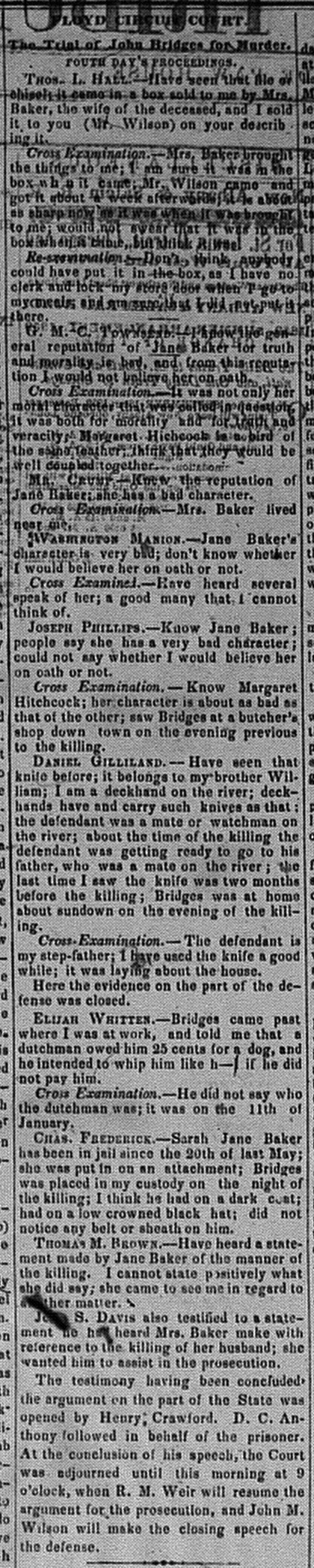
Today, we read the testimonies of Thomas L. Hall, G. M. C. Townsend, Mr. Crump, Washington Manion, Joseph Phillips, Daniel Gilliland (step-son of John Bridges), Elijah Whitten, Charles Frederick, Thomas M. Brown, and John S. Davis.

New Albany Daily Tribune, Saturday, 5 November 1859, p.2, column 2, Stuart Barth Wrege Indiana History Room

New Albany Daily Tribune, Saturday, 5 November 1859, p.2, column 2, Stuart Barth Wrege Indiana History Room

To be continued…

The State of Indiana v. John Bridges: Trial, Day 3

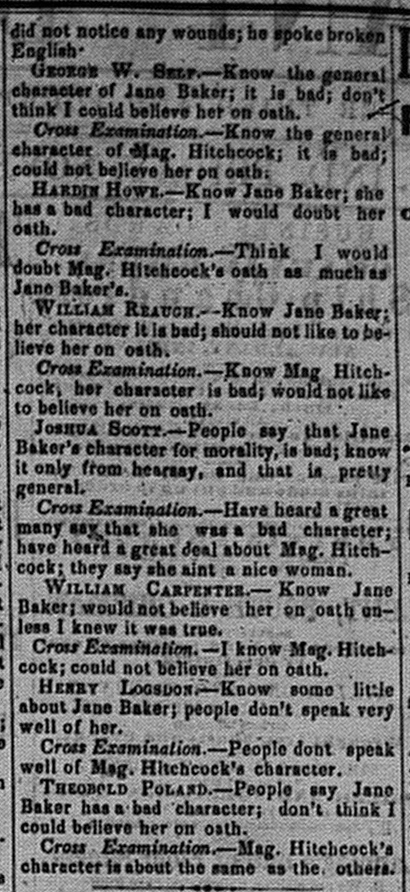
Today, we read the testimonies of Addison Morecraft, William Carey, John S. Davis, Alexander Dowling, James B. Gains, Ezra Gilliland (step-son of John Bridges), Margaret Hitchcock, William Gilliland (step-son of John Bridges), John Underhill, James Reed, Henry Meeker, E. L. Pennington, George W. Self, Hardin Howe, William Reaugh, Joshua Scott, William Carpenter, Henry Logsdon, and Theobold Poland.

New Albany Daily Tribune, Friday, 4 November 1859, p.2, column 3, Stuart Barth Wrege Indiana History Room

New Albany Daily Tribune, Friday, 4 November 1859, p.2, column 3, Stuart Barth Wrege Indiana History Room

New Albany Daily Tribune, Friday, 4 November 1859, p.2, column 4, Stuart Barth Wrege Indiana History Room

New Albany Daily Tribune, Friday, 4 November 1859, p.2, column 4, Stuart Barth Wrege Indiana History Room

To be continued…