Source Citation Made Easy

One of the things that I have trouble with in my genealogy research is source citation.  Of course, I understand the importance of citing sources, and I do so to the best of my ability.  My two big problems are format and decision-making.

When it comes to format, I’m fairly comfortable with the Modern Language Association (MLA) style.  I used it the most in college and I can write an MLA source citation for print books in no time.  What I have trouble with are the oddities.  By oddities, I mean letters, photographs, microfilm, etc.  I often end up creating a sort of hodgepodge citation with what information I know others will need to look it up later.

Whenever I do research, I’m faced with either having to write down a lot of source information, making sure to note it thoroughly so I know which digital source it goes with, or making digital copies or photocopies of the title and verso pages if I can.

I then enter all of the information into my genealogy software at home.  Once in my genealogy software, it’s not easily retrievable for side projects, such as blog posts.  Maybe that’s a flaw in the software I’ve chosen or maybe it’s common to all genealogy software.  I’m not sure.  In any event, I then find myself having to look things up and write out new bibliographies for my blog posts.

A while back, I was looking for source citation apps on my phone and found a couple that I wanted to try.  I ended up really liking EasyBib.  It’s free and it is really easy to use.  At first, I just input the information for the type of source I was using and then write down whatever it generated (you can e-mail it to yourself).  Then, I realized there was a corresponding website, which made it even easier.  I started clicking the copy and pasted option and pasting it directly into my post.

Today, as I was reading the newest issue of Internet Genealogy, I came across a list of genealogy apps.  There were several listed that I am familiar with and use, but EasyBib wasn’t one of them.  In fact, there were no suggestions for source citation apps.  I decided to play around some with the website.

When you first see the website, you can choose a citation style and a source type.  The most common source types have their own tabs, but there are other options.

59 source type options

59 source type options

Once you have selected what you need, type in the book title, web address, etc. and click “Cite It” to generate a citation.

If you sign up for an account, you can create folders and projects.  One of my folders would be “Blog.”  Projects within this folder would be “Rakestraw, Francis,” “Springer, Frank,” etc.

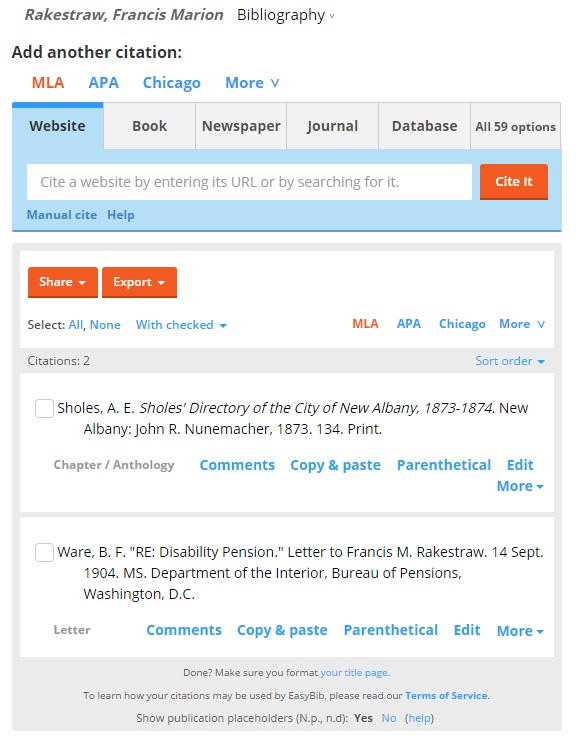
I started this with Francis Rakestraw and added a couple of source citations to the project.

Francis Rakestraw sources

Francis Rakestraw sources

I can then check each source that I’m using, click “Export,” and select “Copy & Paste”.  It will open up a new tab with a works cited page.

Works Cited tab

Works Cited tab

EasyBib turned out to be a great solution for me, and I wanted to pass it on in case it might be useful to others too.

Francis Rakestraw: The Effects of War (52 Ancestors #21)

George William

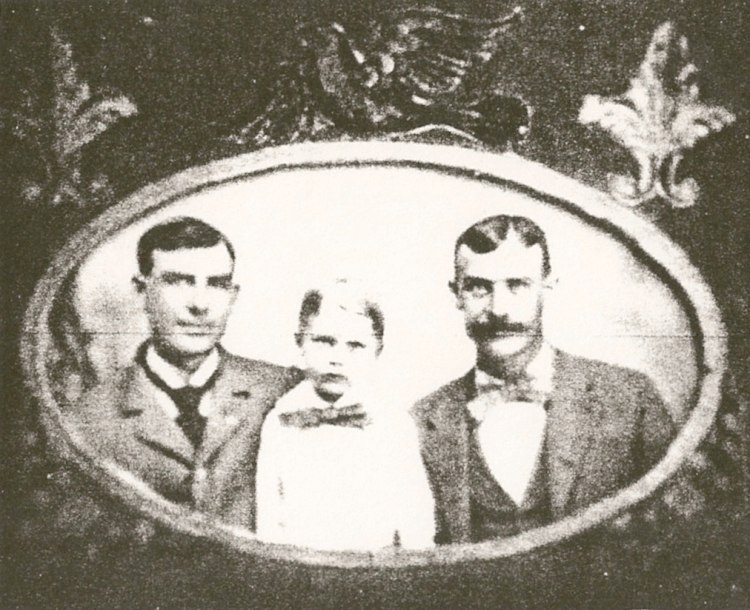
George William “Willie” Rakestraw, Charles M. “Charlie” Rakestraw, and Francis Marion Rakestraw, circa 1900. Three generations.

Francis Marion Rakestraw was born on December 22, 1847 in New Albany, Indiana to parents Milton and Mary Susan (Henderson) Rakestraw.1,2,3,4  He was the oldest of three children, all boys.4  When Francis was seven years old, his father died.5  Mary Susan married James Hand two years later.6,7

Francis enlisted in the army on December 28, 1863 in New Albany.  He had just turned sixteen, but he told the recruiter that he was eighteen.  He gave his occupation as fisherman.  Francis entered as a Private and was assigned to Company B of the Thirteenth Cavalry, 131st Regiment of the Indiana Infantry.8,9,10,11

The Thirteenth Cavalry was the last cavalry organized in Indiana.  Recruiting for the companies began in September of 1863 and ended in April of 1864.  Colonel Gilbert Marquis Lafayette Johnson was the commanding officer.  On April 30, 1864, the Cavalry left Indianapolis and boarded a train for Nashville, Tennessee.  They trained in Nashville for a month and then departed, again by train, for Huntsville, Alabama to garrison the post there.  They were engaged in several skirmishes while trying to keep the supply lines clear.8,10  In Nashville, Francis was thrown from his saddle mule, which caused a back injury.  In Huntsville, he contracted malarial fever.12,13

On October 1, 1864, the Thirteenth Cavalry held the post against the command of the rebel General Buford.  On October 16th, six of the companies went to Louisville, Kentucky for fresh horses.  Company B remained at the post.  The companies that had gone to Louisville did not come back to Huntsville, but were rerouted to fight in Nashville.  Company B and the remaining five companies were sent to Nashville as well.  The Thirteenth Cavalry fought in the Battle of Nashville, alongside several other regiments, against Hood’s troops and defeated them on December 16, 1864.  After the battle, all of the companies were reunited and assigned to the Second Brigade, Seventh Division of the Cavalry Corps of the Military Division of Mississippi under Colonel Johnson.8,10

On February 11, 1865, the Thirteenth Cavalry boarded transports bound for New Orleans, but were rerouted to fight at Mobile Bay.  Mobile fell in April of 1865.  The Cavalry then participated in a number of raids in the area, until they were assigned to garrison at Macon.8,10

Francis mustered out with the rest of the regiment at Vicksburg, Mississippi on November 18, 1865.  His discharge paper says that he was eighteen at this time, which is accurate.8,9,10,11
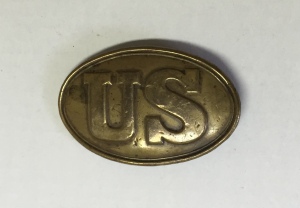
Francis Rakestraw's Civil War belt buckle.

Francis Rakestraw’s Civil War belt buckle.
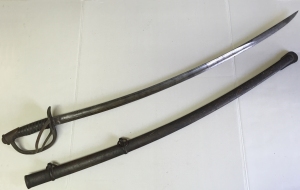
Francis Rakestraw's Civil War sword.

Francis Rakestraw’s Civil War sword.

Having some disability after his accident, Francis took a job with J. Bragdon & Co., proprietors of New Albany Rolling Mills.14

On October 22, 1867, Francis married Mary Elizabeth (Gilliland) Brown.1,3,15  They had two children, Zerilda Eleanora “Ella,” born in 1868, and George William “Willie,” born in 1873.3,16,17

After Willie’s birth, Francis began working as a driver for Israel P. Park’s coal yard.18  In 1882, he began working for Ohio Falls Iron Works, as a laborer.19  In 1886, he took a job as a driver at E. W. Fawcett’s coal and ice company.20  Francis became a driver at John Newhouse & Bro. coal company in 1892.21

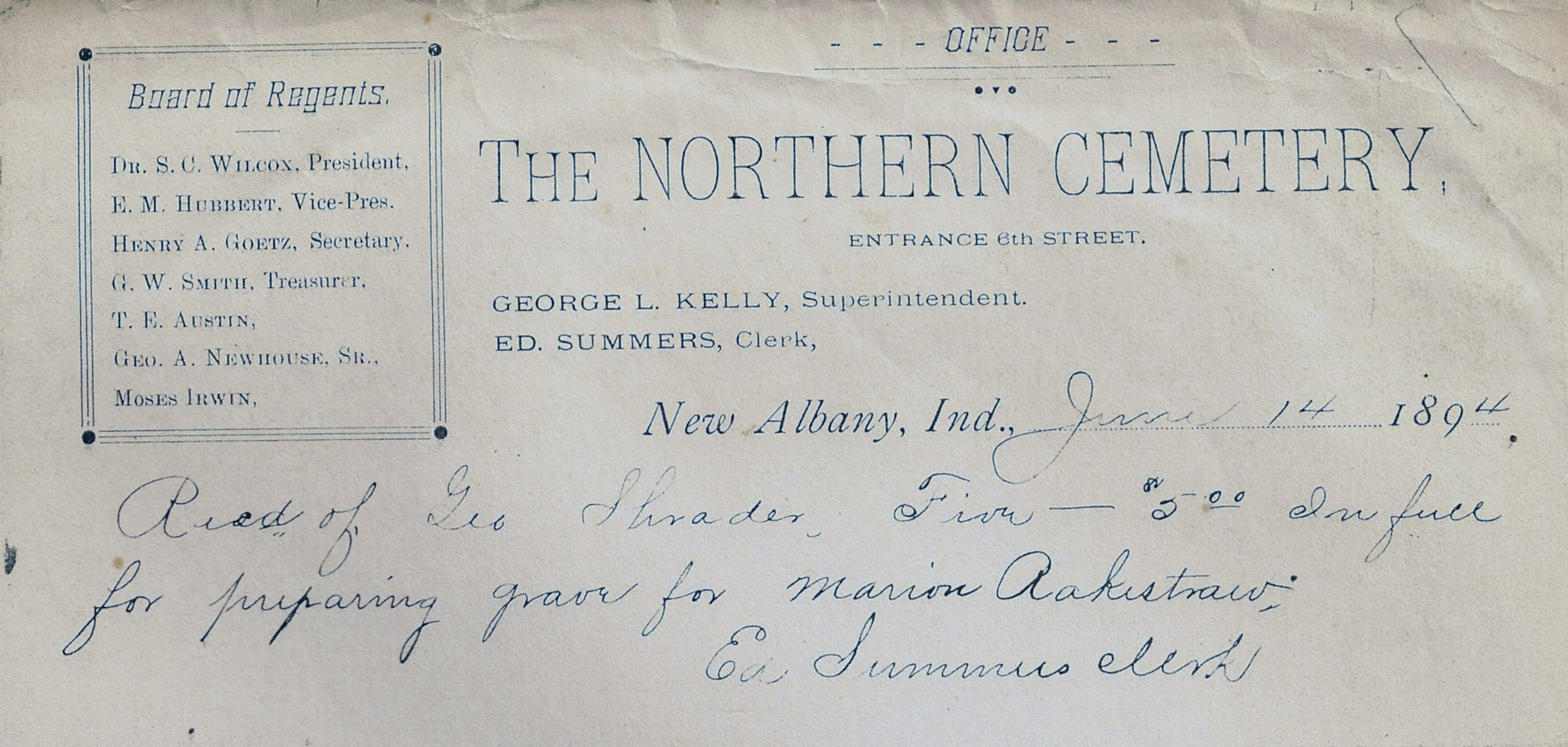
Francis’ daughter died in June of 1894 of consumption.22  George Shrader was the undertaker, and it was at about this time that Francis began working as a driver for Shrader, who also owned a livery.23,24  He worked for the Shraders until November of 1910, when he contracted Pulmonary Tuberculosis.1,25,26

Francis Marion Rakestraw died on January 27, 1911 and was buried at Soldier’s National Cemetery in New Albany, Indiana.1,2,3,11
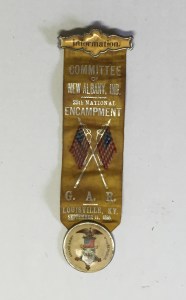
Francis Rakestraw's G.A.R. Information Committee ribbon.

Francis Rakestraw’s G.A.R. Information Committee ribbon.
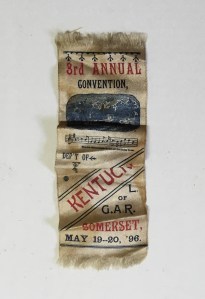
Francis Rakestraw's G.A.R. 3rd Annual Convention (1896) ribbon.
Francis Rakestraw’s G.A.R. 3rd Annual Convention (1896) ribbon.

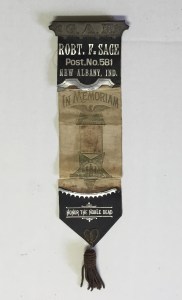
Francis Rakestraw's G.A.R. In Memoriam ribbon.

Francis Rakestraw’s G.A.R. In Memoriam ribbon.
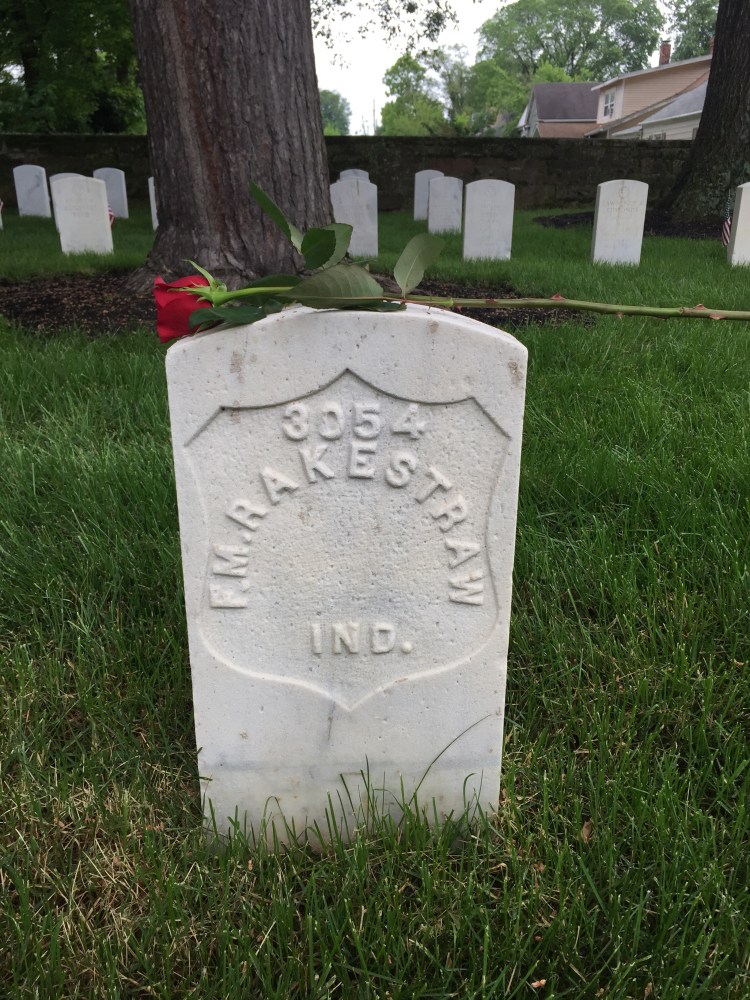
Tombstone,  #3054, New Albany National Cemetery, New Albany, Indiana.  Photo taken 25 May 2015 by Melissa Wiseheart.

Tombstone, #3054, New Albany National Cemetery, New Albany, Indiana. Photo taken 25 May 2015 by Melissa Wiseheart.


Sources

1.  Floyd County, Indiana Death Records, Book CH-22, p. 17, Stuart Barth Wrege Indiana History Room.

2.  Obituary, New Albany Evening Tribune, Friday, 27 January 1911, p. 4, column 2, Stuart Barth Wrege Indiana History Room.

3.  Transcription of the Rakestraw Family Bible.

4. 1850 U.S. Federal Census, Jeffersonville, Clark, Indiana, pp. 313-314, Ancestry.com.

5. Clipp, Mary Cuzzort, et al. Fairview Cemetery, Volume 1, New Albany, Floyd County, Indiana. New Albany, IN: Southern Indiana Genealogical Society, 1991. 62. Print.

6. Floyd County, Indiana Marriages, Volume 4, p. 340, Stuart Barth Wrege Indiana History Room.

7. 1860 U.S. Federal Census, New Albany, Floyd, Indiana, p. 134, Ancestry.com.

8. Terrell, W.H.H. Report of the Adjutant General of the State of Indiana. Volume 3. Indianapolis: Samuel M Douglass, 1866. 290-296. Print.

9. Terrell, W.H.H. Report of the Adjutant General of the State of Indiana. Volume 7. Indianapolis: Samuel M Douglass, 1866. 306-308. Print.

10. Powell, John W. History of the Thirteenth Indiana Cavalry Regiment, 1863-1865. Utical, KY: McDowell Publishing, 1987. Print.

11. Discharge papers, Francis Marion Rakestraw, 18 November 1865.

12. Notice, New Albany Evening Tribune, 7 January 1888.

13. Letter, U.S. Department of the Interior, Bureau of Pensions to Francis Marion Rakestraw, 14 September 1904.

14. Sholes, A.E., compiler. Sholes’ Directory of the City of New Albany, 1873-1874. New Albany, IN: John R. Nunemacher, 1873. 134. Print.

15. Floyd County, Indiana Marriages, Volume 6, p. 369, Stuart Barth Wrege Indiana History Room.

16. 1870 U.S. Federal Census, New Albany, Floyd County, Indiana, p. 15, Ancestry.com.

17. 1880 U.S. Federal Census, New Albany, Floyd County, Indiana, p. 4D, Ancestry.com.

18. Caron, C.K. Caron’s Directory of the City of New Albany for 1877-78. New Albany, IN: C.K. Caron, 1877. 166. Print.

19. Caron, C.K. Caron’s Directory of the City of New Albany for 1882-83. New Albany, IN: C.K. Caron, 1882. 218. Print.

20. Caron, C.K. Caron’s Directory of the City of New Albany and Jeffersonville for 1886-87. New Albany, IN: C.K. Caron, 1886. 237. Print.

21. Caron, C.K. Caron’s Directory of the City of New Albany and Jeffersonville for 1892-93. New Albany, IN: C.K. Caron, 1892. 310. Print.

22. Clipp, Mary Cuzzort, et al. Fairview Cemetery, Volume 4, New Albany, Floyd County, Indiana. New Albany, IN: Southern Indiana Genealogical Society, 1991. 71. Print.

23. Shrader receipt written to Francis Rakestraw for burial preparations, 14 June 1894.

24. Caron, C.K. Caron’s Directory of the City of New Albany and Jeffersonville for 1895-96. New Albany, IN: C.K. Caron, 1895. 381. Print.

25. Caron, C.K. Caron’s Directory of the City of New Albany and Jeffersonville for 1909-10. New Albany, IN: C.K. Caron, 1909. 308. Print.

26. Letter, George William Rakestraw to Francis Marion Rakestraw, 15 December 1910.

Benjamin Gilbert: He Who Wrestled with God (52 Ancestors #20)

Benjamin Gilbert was one of my Quaker ancestors.  As such, I’ll be including the dates as they were written in the various records.  The Quaker calendar was different before 1753.  Unless otherwise cited, all information in this post is from The Captivity and Sufferings of Benjamin Gilbert and His Family, 1780-83 by William Walton and Frank H. Severance (1904).

Benjamin was born to Joseph and Rachel (Livezey) Gilbert in 1711.  He married, first, Sarah Mason in the sixth month, 1731, and, second, Elizabeth (Walton) Peart in 1761.

The children of Benjamin and Sarah were Rachel, Abigail, Sarah, Joseph, Benjamin, John, Sarah, Joshua, and Caleb.

U.S. Quaker Meeting Records, 1681-1935, Abington, Montgomery, Pennsylvania, Ancestry.com

U.S. Quaker Meeting Records, 1681-1935, Abington, Montgomery, Pennsylvania, Ancestry.com

The children of Benjamin and Elizabeth were Jesse, Rebecca, Abner, and Elizabeth.

In Rebecca Gilbert‘s story, I related some of the events of the Gilbert family’s capture by Indians.  Just after his release from captivity, on his way home, Benjamin died on a boat in the middle of the St. Lawrence River on the eighth day of the sixth month, 1780.  He was buried under an oak tree outside the fort at Coeur de Lac (Coteau du Lac), Canada.

From the tales told in the aforementioned book, it seems that Benjamin was a very good man.  Even so, he had some trouble with alcohol.  This trouble resulted in his being disowned by the Society of Friends twice during his life.

The first occurrence was while he lived in Richland, Pennsylvania.  He was disowned by the Society in the eleventh month, 1744/5.  They cited that he was “sometimes addicted to drinking spirituous liquors to excess.”  Being filled with remorse, he acknowledged and apologized for his behavior and was reinstated in the sixth month, 1749.

Shortly thereafter, Benjamin and his family removed to Bucks County, Pennsylvania, and transferred their membership to the local Meeting.  Benjamin’s first wife, Sarah, died in the twelfth month, 1759.  This caused “irregularities” in Benjamin’s conduct that resulted in his being disowned in the sixth month, 1760.

Benjamin attempted a reconciliation with the Society in 1770, but the Friends thought it best that he remain on probation.  During this probation, Benjamin wrote and published A Discourse, showing that there can be no Salvation to that Soul who doth not know a being made perfect in this Life; A Discourse on Universal Redemption, wherein it is proved (by Scripture and Reason) that it is impossible; A Further Discourse upon Perfection and Universal Redemption; A Discourse upon what is called Original Sin; A Discourse upon Election and Reprobation; and A further Discourse on Baptism, in answer to two Sermons on Water Baptism.

In his first volume, Benjamin gives an account of his religious experience:

I was visited in the early part of my life, with the tender love of God; so that I could never get clear of that lively impression; though I often rebelled against it, and fell into practices that were destructive to body and soul to divert myself from this Divine Teacher.  And although this served my turn for a time, until the cool of the day came, and then I would hear the voice of the merciful God again, reproving me for sin:  and sometimes I have given up to it, joined with it, and took up a resolution to mend my ways by forsaking my sins, and living a more circumspect life.  And in this state I found joy and peace with God.

But for want of watchfulness I sustained loss; that is, by not taking care to keep from looking back on my former delights with a hankering mind.  So I gradually fell into my former lusts and pleasures, and went into greater extremes than before.  In this state I was like the troubled sea whose raging waves cast up mire and dirt.  In this way I continued, until I was met in a narrow lane, as Balaam was, so that I could not turn to the right hand, nor the left.  I saw that I must give up to the known will of God in my heart, or I must be shut out of his favour to all eternity.  This was a time of sore trial indeed.  Although the merciful God opened the way to heaven for me, yet it appeared afar off, and the way hard and difficult for me to walk in.  And when I looked the other way, I saw nothing but torment to be my portion forever; and that I must be hurried into it in an ignominious manner, if I did not give up to God’s will.

In this deplorable state the great and blessed God had compassion upon me, and drew the eye of my mind to himself (in the very same manner that I had beheld him in the days of my youth, and at times ever since), and gave me some ease, by refreshing my soul with His tender love, and also renewed my hopes of salvation.  In this state, I was willing to give up all – I was willing to forsake all.  I thought if the Lord would preserve me from sinning against Him, I did not care what I suffered, or where my lot was cast.  In this disposition, I found access to God, through His dear Son, my Saviour; and a blessed time it was.  I prayed to God to preserve me from sinning, and (if He pleased) to forgive all my past sins.  And I think I have not passed one day since, without feeling more or less of His Divine goodness in my soul.

Benjamin then moved, with his second wife and their children, to the wilderness near Blue Mountain, on Mahoning Creek in Northampton County, Pennsylvania.  In the fourth month, 1776, Benjamin went to visit friends and attended the monthly meeting.  He was reinstated to the Society of Friends, and his wife, Elizabeth, was also received.  At the next monthly meeting, his four children with Elizabeth were received as members of the Abington Meeting.

Frontispiece from The Captivity and Sufferings of Benjamin Gilbert and His Family, 1780-83 by William Walton and Frank H. Severance (1904).

Frontispiece from The Captivity and Sufferings of Benjamin Gilbert and His Family, 1780-83 by William Walton and Frank H. Severance (1904).

Friedrich Von Allmen: A Swiss Dairy Farmer in America (52 Ancestors #19)

I wrote a little about Friedrich when I wrote about his wife, Susannah Stähli, but there is more to his story.  Friedrich Von Allmen was born on May 9, 1832, in Switzerland, to parents Peter and Margaretha (Häsler) Von Almen.  Von Allmen is sometimes spelled Von Almen.  I’ve typically seen it with two “l”s in reference to Friedrich and one “l” in reference to his father.

The Von Allmen family had a dairy in Wilderswil, Switzerland.  In 1883, Friedrich moved his family to America to join his uncle Ulrich Von Almen, who had been here since 1833.  Friedrich and his family came over on the S.S. Canada and landed in New York.

Friedrich purchased land in Floyd County, Indiana in 1884.  It was located at the bottom of the knobs just outside of New Albany.  Friedrich went into the dairy business, as did his sons.

1898 Floyd County, Indiana Plat Map (annotated), courtesy of Shirley Wolfe, Von Allmen Family File, Stuart Barth Wrege Indiana History Room

1898 Floyd County, Indiana Plat Map (annotated), courtesy of Shirley Wolf, Von Allmen Family File, Stuart Barth Wrege Indiana History Room

He also swore an oath of allegiance in 1884.

Oath of Allegiance, courtesy of Shirley Wolfe, Von Allmen Family File, Stuart Barth Wrege Indiana History Room

Oath of Allegiance, courtesy of Shirley Wolf, Von Allmen Family File, Stuart Barth Wrege Indiana History Room

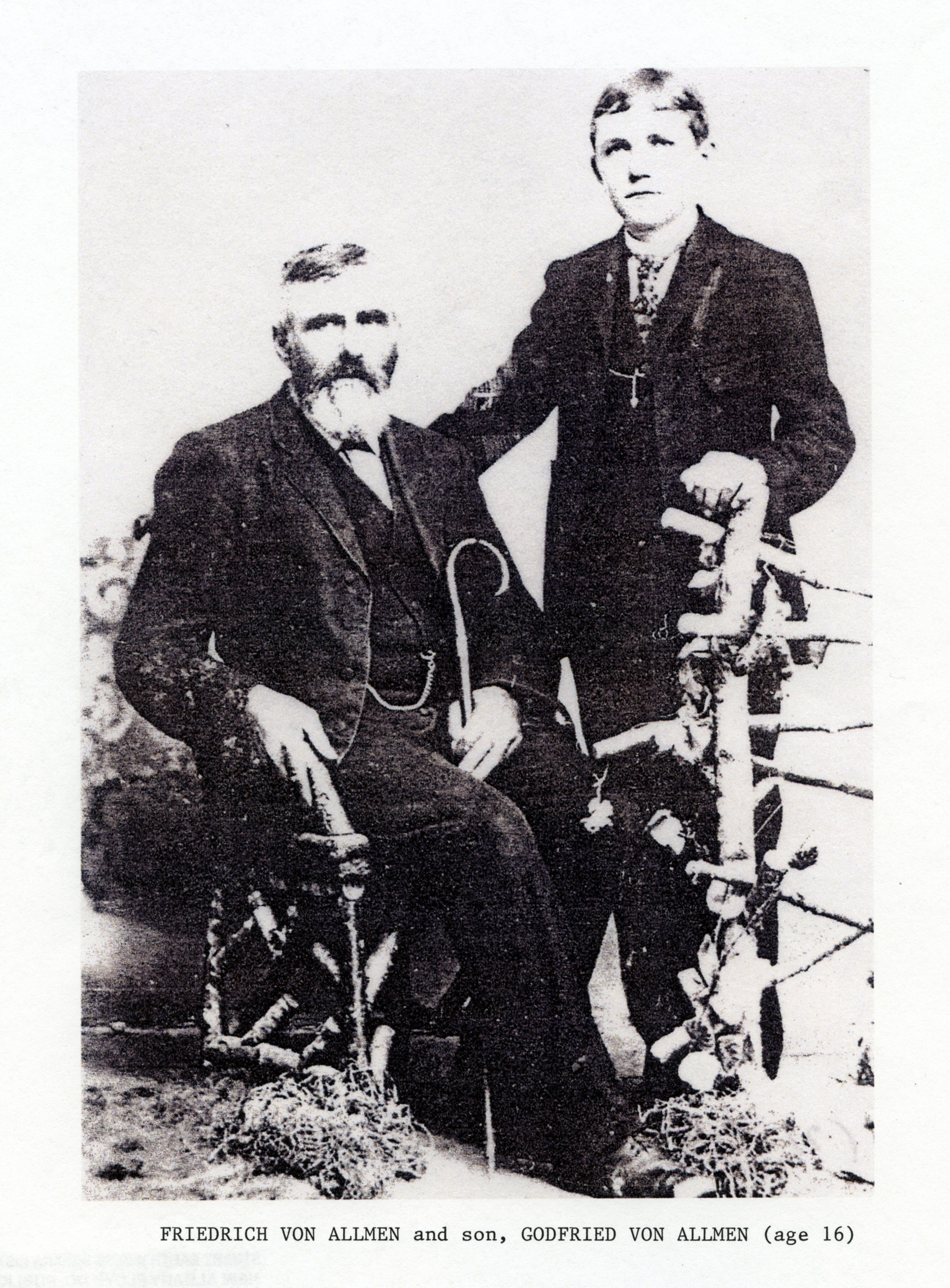
Friedrich and Gottfried Von Allmen, circa 1908, courtesy of Shirley Wolf, Von Allmen Family File, Stuart Barth Wrege Indiana History Room

Friedrich and Gottfried Von Allmen, circa 1898, courtesy of Shirley Wolf, Von Allmen Family File, Stuart Barth Wrege Indiana History Room

Friedrich’s wife, Susanna, died in 1898.  He remarried a few years later.

Marriage Announcement, courtesy of Shirley Wolfe, Von Allmen Family File, Stuart Barth Wrege Indiana History Room

Marriage Announcement, courtesy of Shirley Wolf, Von Allmen Family File, Stuart Barth Wrege Indiana History Room

Friedrich died on March 11, 1908 at his home.  He left a will, wherein he names his son, Peter, as executor.  Friedrich was buried next to his first wife, Susannah, at Atkins Cemetery.

Floyd County, Indiana Death Record for Friedrich Von Allmen, Indiana State Board of Health

Floyd County, Indiana Death Record for Friedrich Von Allmen, Indiana State Board of Health

Obituaries, courtesy of Shirley Wolfe, Von Allmen Family File, Stuart Barth Wrege Indiana History Room

Obituaries, courtesy of Shirley Wolf, Von Allmen Family File, Stuart Barth Wrege Indiana History Room

Kraft Funeral Home Record, courtesy of Shirley Wolfe, Von Allmen Family File, Stuart Barth Wrege Indiana History Room

Kraft Funeral Home Record, courtesy of Shirley Wolf, Von Allmen Family File, Stuart Barth Wrege Indiana History Room

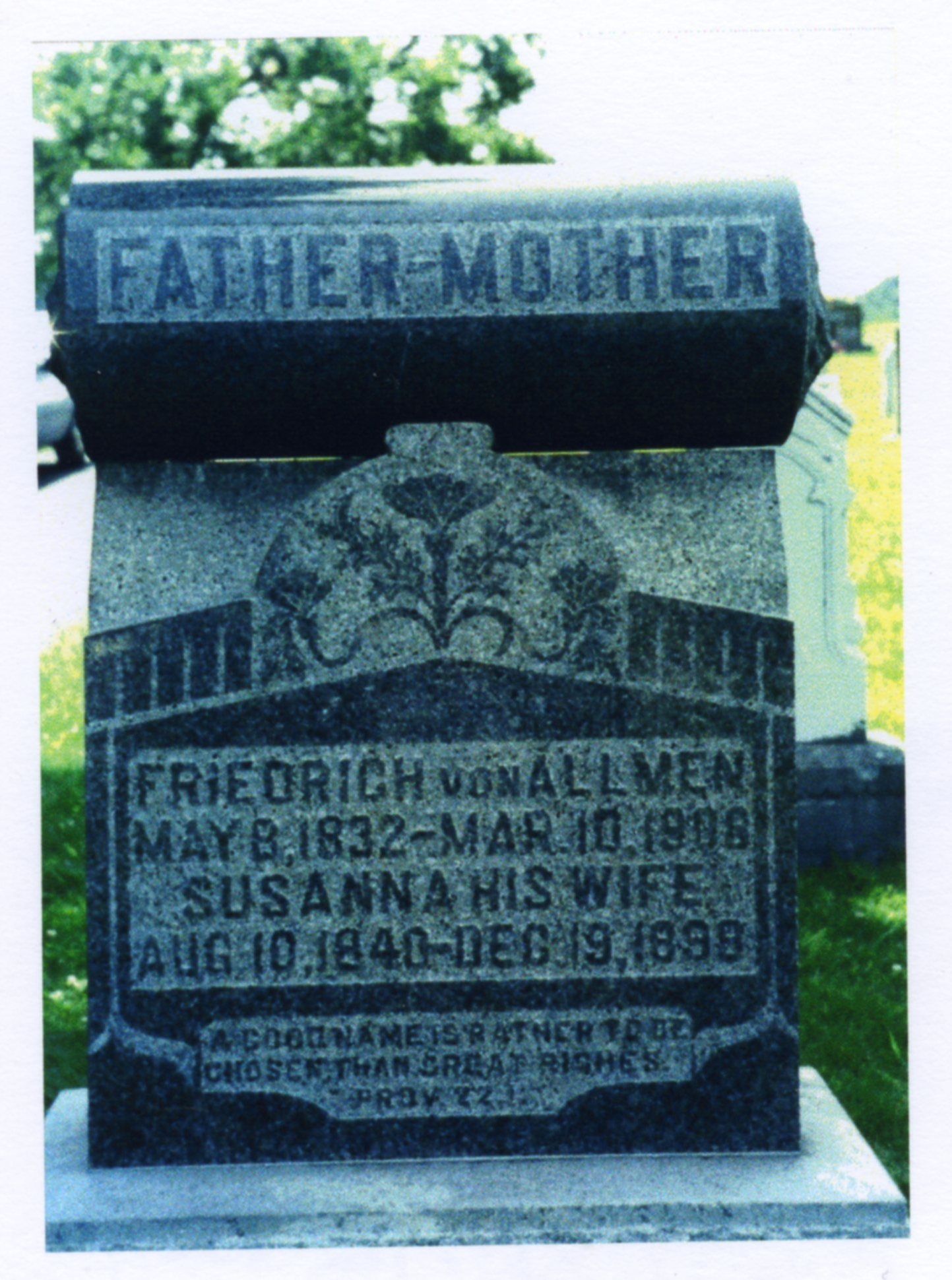
Tombstone of Friedrich and Susanna Von Allmen at Atkins Cemetery, courtesy of Shirley Wolf, Von Allmen Family File, Stuart Barth Wrege Indiana History Room

Tombstone of Friedrich and Susanna Von Allmen at Atkins Cemetery, courtesy of Shirley Wolf, Von Allmen Family File, Stuart Barth Wrege Indiana History Room

Von Allmen Family Crest, courtesy of Shirley Wolf, Von Allmen Family File, Stuart Barth Wrege Indiana History Room

Von Allmen Family Crest, courtesy of Shirley Wolf, Von Allmen Family File, Stuart Barth Wrege Indiana History Room

Phillip Irey: What’s in a Will (52 Ancestors #18)

I haven’t done much research on my Irey line.  Syntha Irey is the only one I’ve thoroughly researched.  This week’s 52 Ancestors in 52 Weeks theme of “Where There’s a Will” prompted me to research Syntha’s father, Phillip Irey.  I have a copy of his will from a probate record and I’ve never done anything with it other than to use it as one source for Syntha’s marriage to Charles Rakestraw.  I began to follow the other clues in the will and was surprised at how much information I found in just a few hours.

The first thing I noted was that Phillip named children and grandchildren in his will, but not his wife.  I surmise from this that she must have died prior to the writing of the will, which was on August 22, 1841.  In the 1840 Census, Phillip was between the ages of 80 and 90.  There was a tick mark in the corresponding column on the female side, which was presumably his wife.  The 1840 Census enumeration began on June 1st, so it seems that Phillip’s wife died sometime between June 1, 1840 and August 22, 1841.

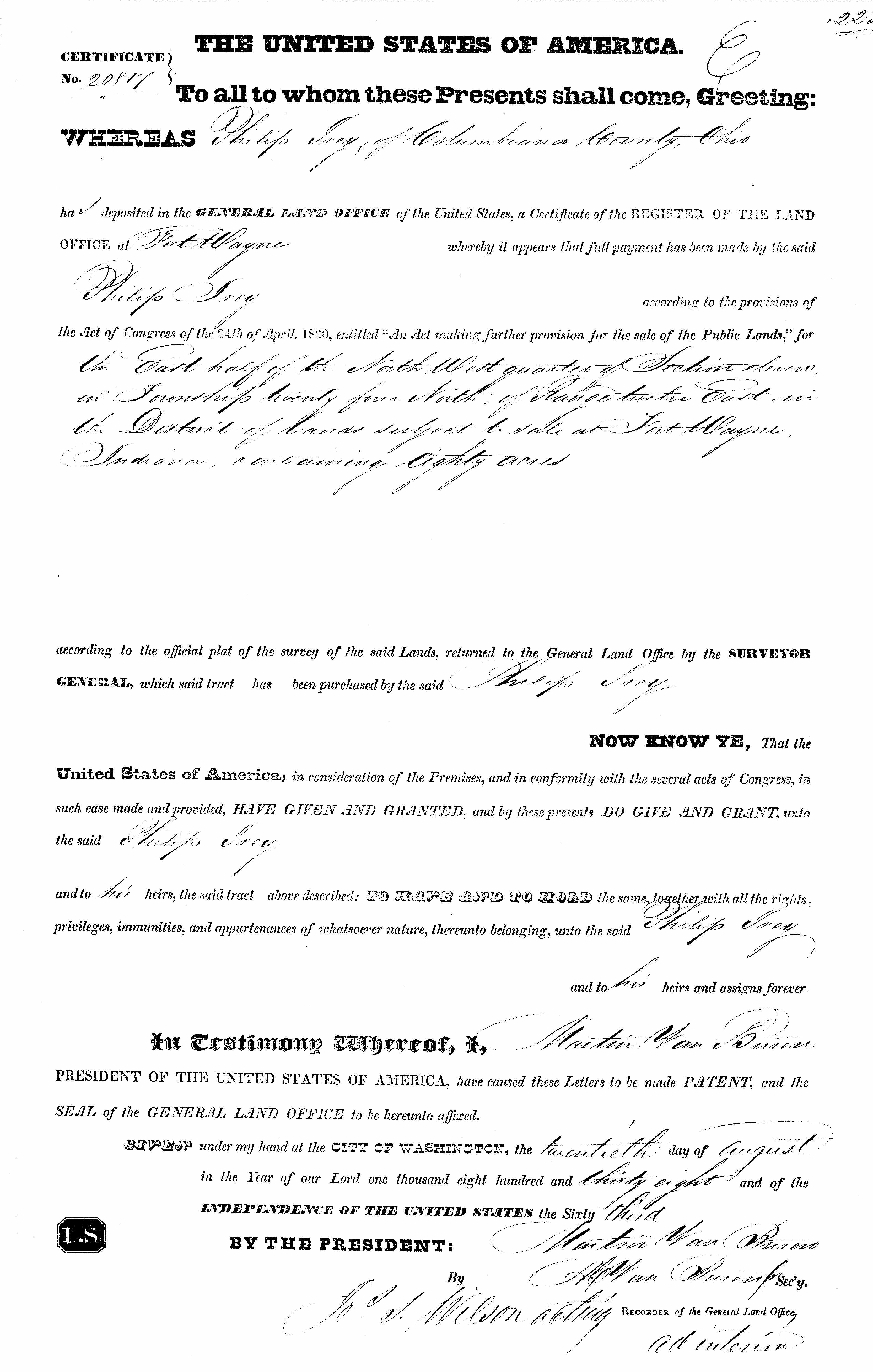
The next thing I noticed was a legal description for land in “Fort Wain,” Indiana.  I’ve been working with deeds and abstracts a lot lately at work, so that just jumped right out at me.  I did find a deed for Phillip Irey who purchased land matching that description in Fort Wayne, Indiana on August 20, 1838.

U.S. General Land Office Records, 1796-1907, deed for land in Fort Wayne, Allen, Indiana, Ancestry.com

U.S. General Land Office Records, 1796-1907, deed for land in Fort Wayne, Allen, Indiana, Ancestry.com

I also found a deed for land that he had purchased in Bucyrus, Ohio on April 5, 1836.

U.S. General Land Office Records, 1796-1907, deed for land in Bucyrus, Crawford, Ohio, Ancestry.com

U.S. General Land Office Records, 1796-1907, deed for land in Bucyrus, Crawford, Ohio, Ancestry.com

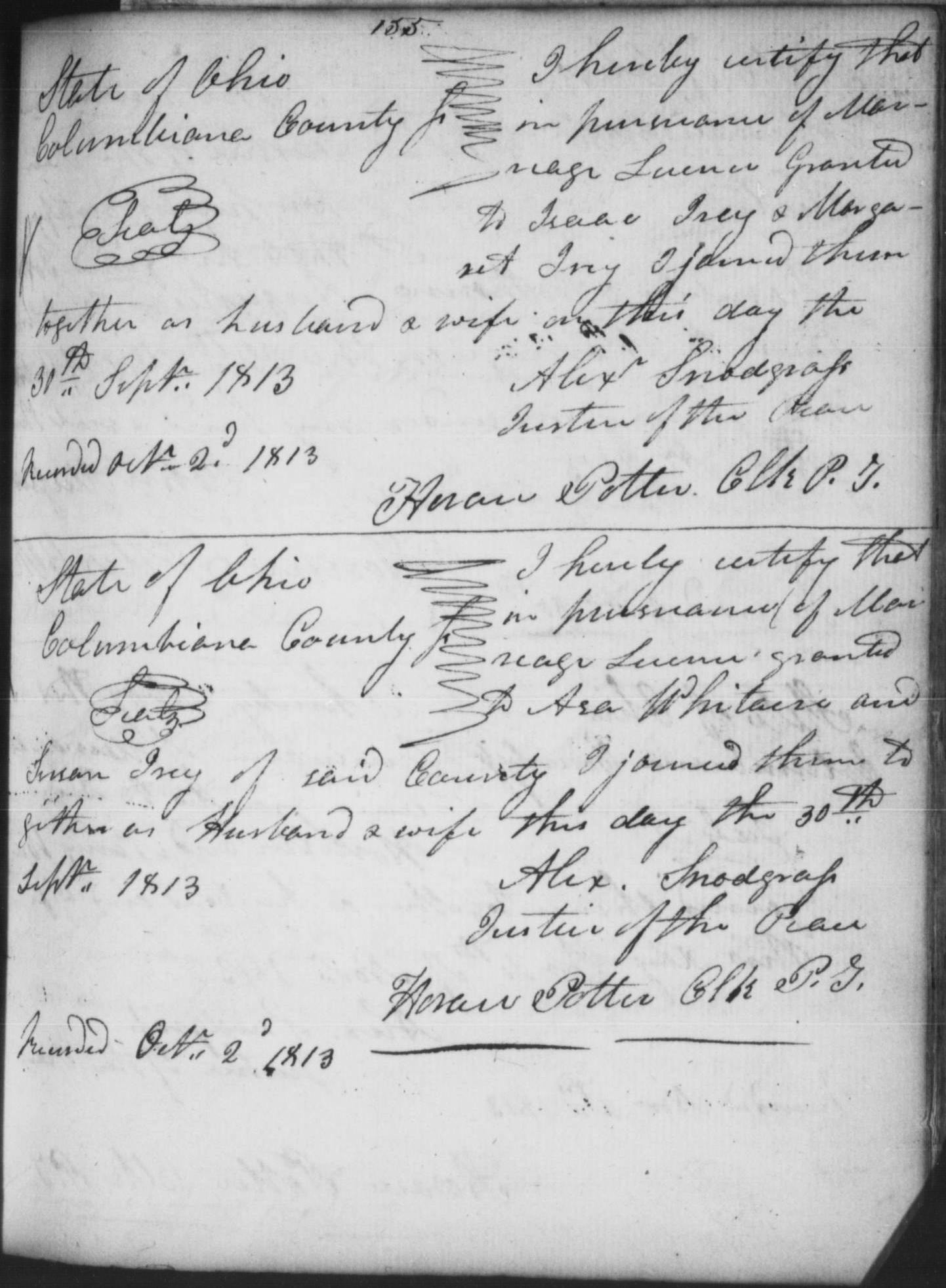
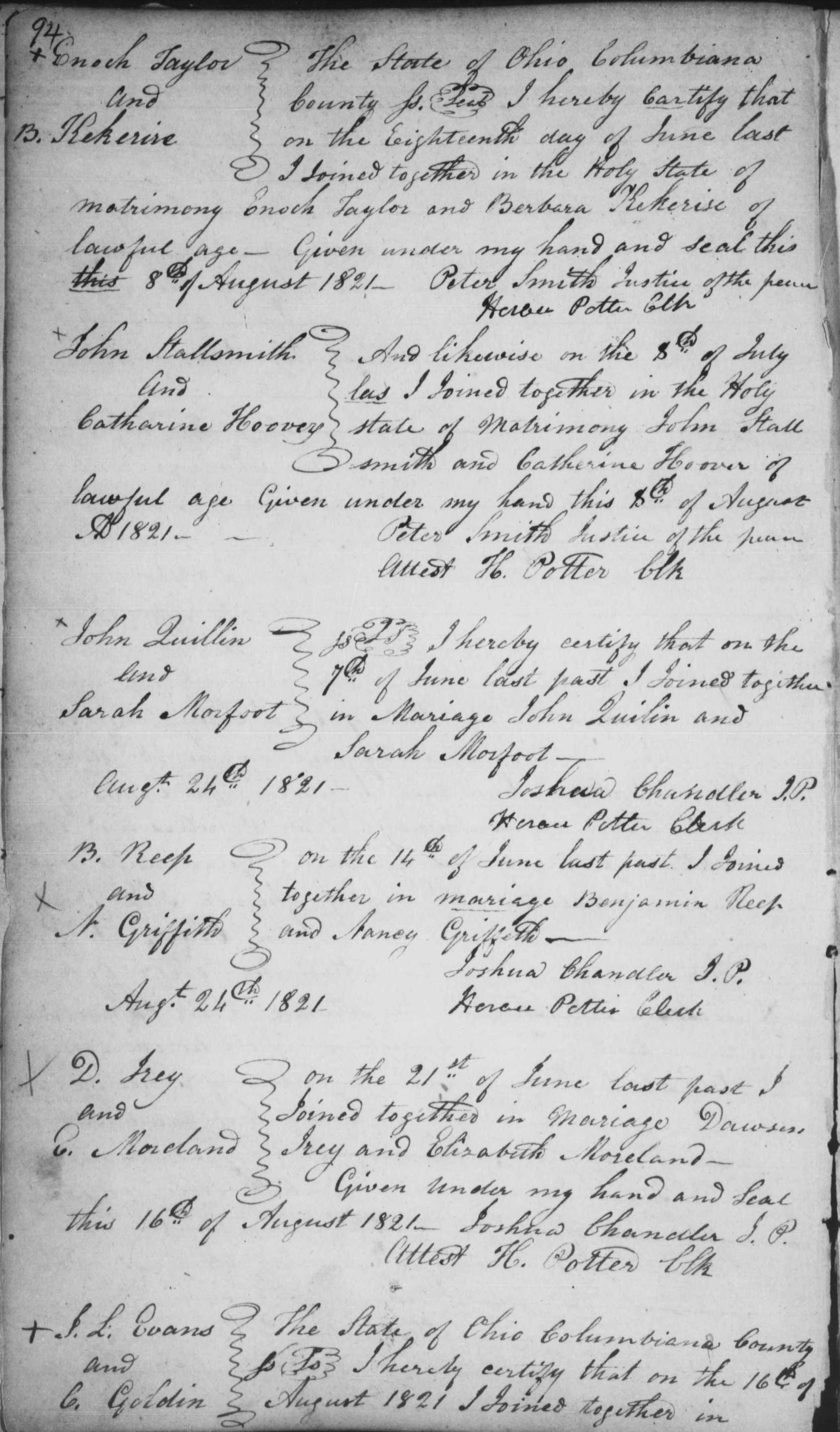
Next, I decided to run through the names of the children.  All of his daughters were married by the time he wrote his will, so this gave me a bit more to go on, knowing their married names.  I managed to find marriage records for all of his children (John, Isaac, Dawson, Sarah, Susannah, Jane, Eli, and Syntha) on FamilySearch.org.

Since Phillip bequeaths a portion of his estate to the children of Susannah and Jane, I am fairly certain that they had both died before August 22, 1841.  It also appears from the language of the will that Dawson was not expected to live long.

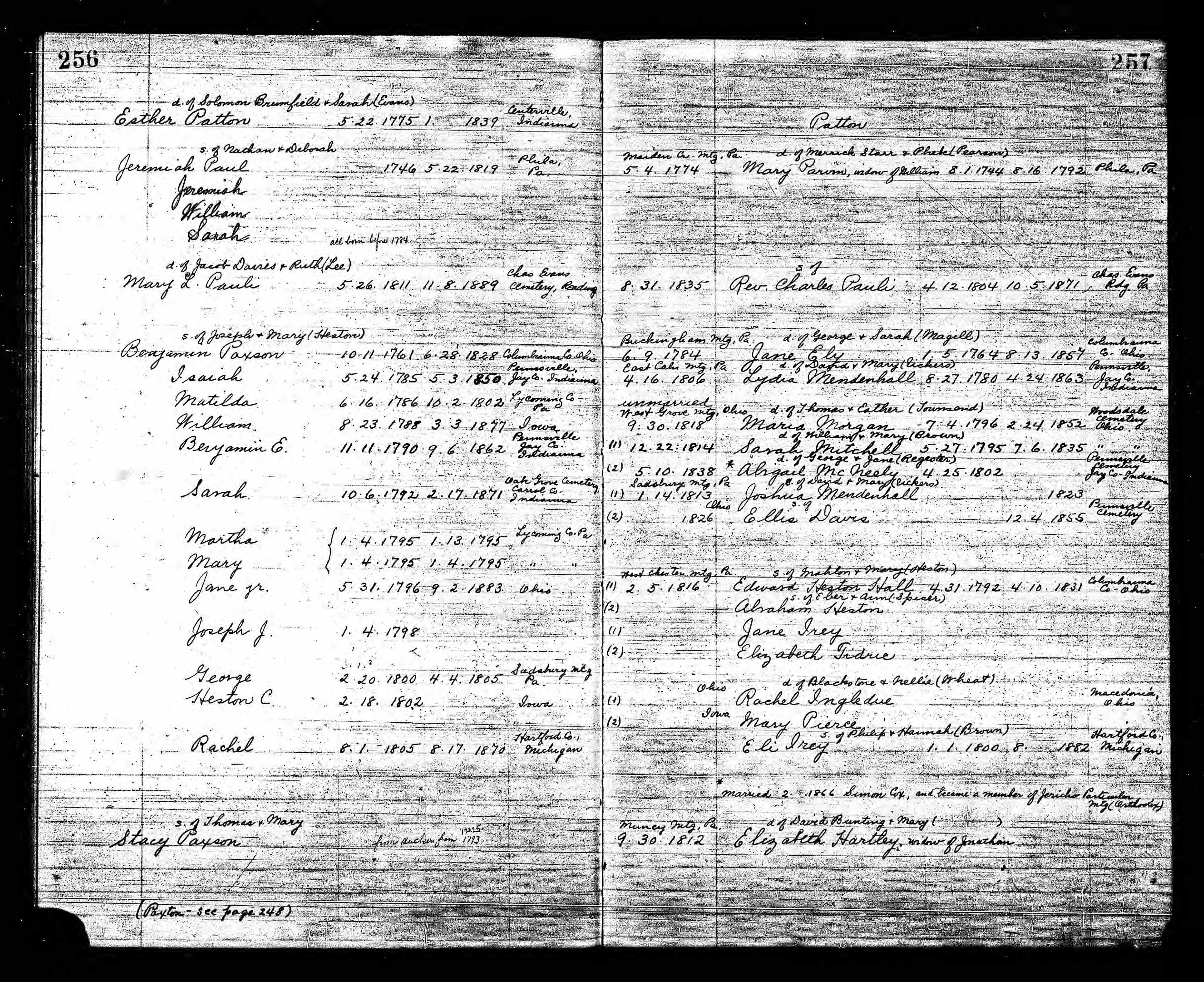
The Quaker records pertaining to Jane and Eli were probably the most significant find of the night.  Jane Irey married Joseph Paxson, and Eli Irey married Joseph’s sister, Rachel.  Presumably, the Paxsons were Quakers, since they are the ones listed in the book and Jane and Eli show up merely as spouses.  The Meeting records give lots of good information.

U.S. Quaker Meeting Records, 1681-1935, Exeter Monthly Meeting, Berks, Pennsylvania, p. 256, Ancestry.com

U.S. Quaker Meeting Records, 1681-1935, Exeter Monthly Meeting, Berks, Pennsylvania, p. 256, Ancestry.com

U.S. Quaker Meeting Records, 1681-1935, Wrightstown Monthly Meeting, Bucks, Pennsylvania, p. 108, Ancestry.com

U.S. Quaker Meeting Records, 1681-1935, Wrightstown Monthly Meeting, Bucks, Pennsylvania, p. 108, Ancestry.com

The headers for the columns should read as follows:  Name, Date of Birth, Date of Death, Place of Burial, Marriage, Spouse’s Name, Date of Birth, Date of Death, Place of Burial.  In addition, they wrote in the names of parents where they could.

From this, I know that Phillip’s wife was Hannah Brown.  Eli Irey was born January 1, 1800 and died in August of 1882 and is buried in Hartford County, Michigan.  Not much can be learned about Jane Irey, other than she was the first wife of Joseph Paxson.  This also gives a lot of information on Joseph Paxson, his siblings, his parents, and even the names of his grandparents.  A fantastic find!